Back in the Game launches at Arizona State Prison-Kingman

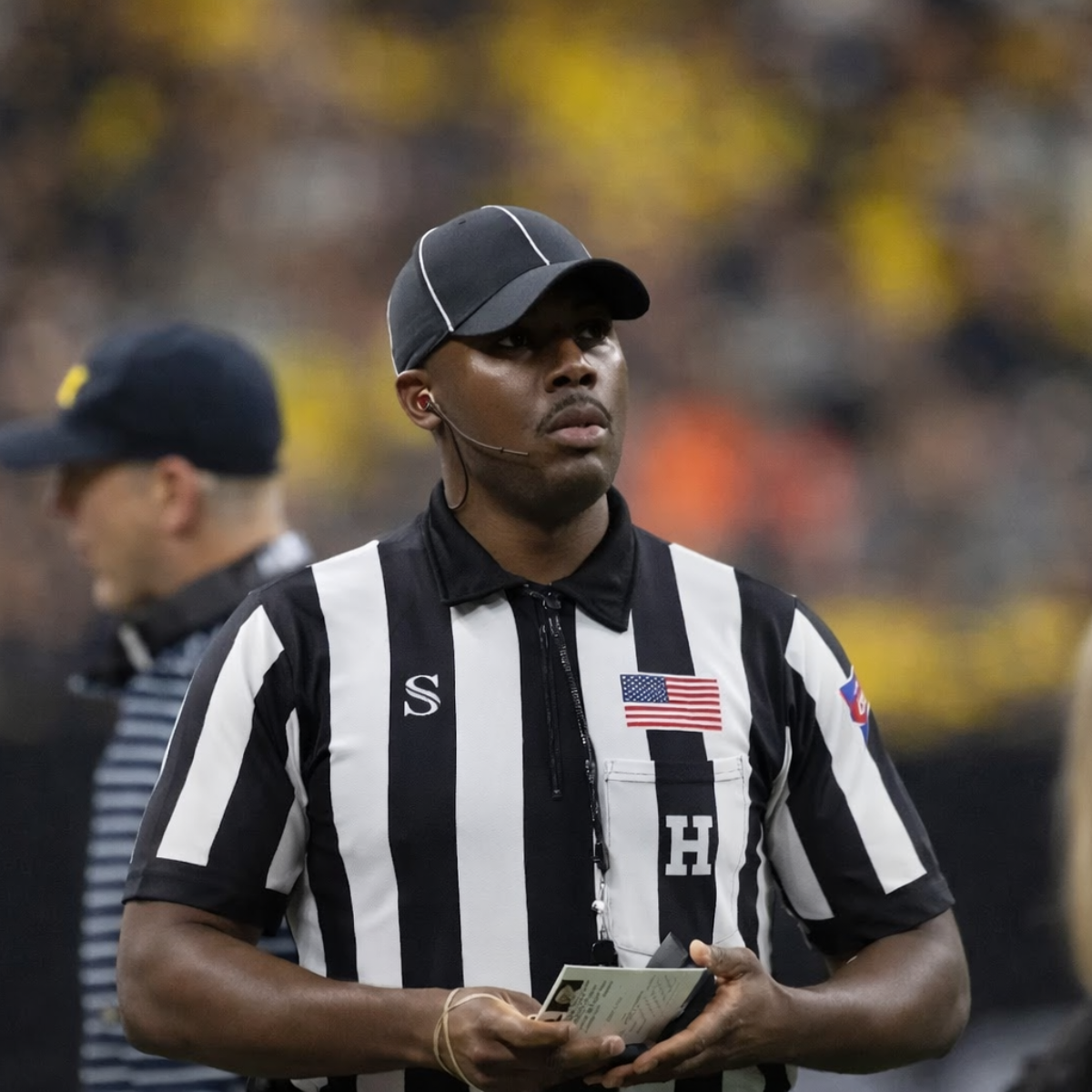
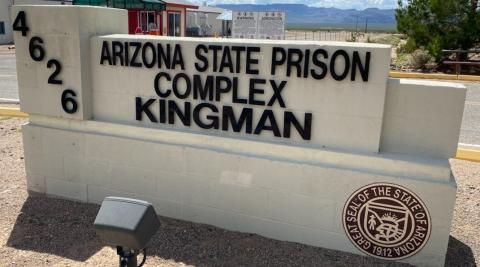
Fair Chance Sports has launched Back in the Game, a peer-facilitated basketball officiating and workforce development program piloted at Arizona State Prison Kingman that trains incarcerated learners to become basketball referees.
According to the National Federation of State High School Associations, an estimated 50,000 individuals have stopped officiating since the 2018-19 season. Games are being cancelled, programs are shutting down, and communities do not have enough trained officials to keep youth sports running. Back in the Game is designed to address that shortage while creating a credible post-release career pathway for returning citizens.
Back in the Game is peer-facilitated by Larry Stephens, who is currently incarcerated at Kingman.
“Back in the Game is true to its namesake,” said Will Taylor, Executive Director of Fair Chance Sports. “Larry and I have shared twenty years of brotherhood through grassroots sports. My father coached us both on the Wisconsin Wizards, a grassroots basketball program he ran in Milwaukee for over two decades. In high school, we started officiating games as a summer job. Over the years, we recruited dozens of our former teammates and friends to do the same. Many of them are still assigned games by my father today.”
The curriculum runs five sessions. It opens not with a rulebook, but with a story. In the first session, Larry introduces himself and the program through more than a decade of firsthand experience. Having navigated the justice system throughout his adult life, he brings a perspective that meets participants exactly where they are. He has officiated youth and high school basketball across multiple states, including the 2025 Nike Boo Williams Invitational West, carrying a working knowledge of the profession that no outside instructor can replicate. He does not just know the rulebook. He has lived the career these participants are being prepared for.
Each participant receives a sixty-page workbook that travels with them through the entire course. It includes post-session review questions, short-form interpersonal reflection prompts, and an official glossary covering rules, fouls, violations, and mechanics, giving participants a reference they can return to long after the program ends.
Every session follows the same structure: one hour of classroom instruction followed by one hour of on-court demonstration and situational drills. Court work includes lead and trail positioning, crew rotations, and hand signaling practice, building muscle memory alongside rulebook knowledge.
Sessions two and three build the technical and professional foundation. The second session is grounded in the official rulebook of the National Federation of State High School Associations, the governing body that publishes the rules for high school basketball across the United States, alongside the Arizona Interscholastic Association guidelines that administer those rules at the state level. Participants work through the full rules of the game, covering types of violations and fouls, shooting versus non-shooting foul distinctions, bonus situations, and general guarding principles. The session is designed to meet the same standard of knowledge required of any official entering the profession. The third session shifts to professionalism and ethics, grounded in the AIA Code of Ethics. Appearance standards, pre-game protocol, game management, and partner communication are all covered with a clear emphasis: how you carry yourself on the court is a transferable skill that extends well beyond officiating.
The fourth session treats conflict resolution as both a professional competency and a life skill. Anchored by five officiating maxims, participants learn pre-game and post-game wellness routines that prepare the mind and body for high-pressure environments and support healthy decompression after them. Role-play stations and live conflict simulations put those tools to work in realistic scenarios, drawing a direct line between managing a heated moment on the court and navigating the pressures of reentry.
The final session is a graduation. To celebrate the inaugural cohort, Fair Chance Sports hosted a formal ceremony inside Kingman, where participants completed structured reentry planning with officiating defined as a post-release career pathway and were awarded certificates of completion. Joseph “Coach Hooks” Hooks, Program Officer at Fight for Children, delivered the commencement keynote address via Zoom, followed by a live Q&A with participants. “The qualities that make a great referee are the same that make a person worth believing in: integrity, composure, and accountability,” Hooks said. “With your lived experiences, with your training, you guys will be the new standard of what we need in our communities, where many people don’t want to ref anymore.”
Building on the momentum of the basketball officiating pilot, Fair Chance Sports is preparing to launch an introduction to football officiating course this month. The organization is also seeking formal recognition by the Arizona Department of Corrections, Rehabilitation and Reentry so that incarcerated learners can earn work program credits for their participation.
“Stepping onto that court in stripes is not just a career move. It is a statement. It says: I was written off, and I came back. Not to take from the game, but to give to it. Not to be judged, but to be the one trusted to judge. That inversion is everything. That is what Back in the Game is about. That is the redeeming power of the referee.”
Published by
Fair Chance Sports